

How dating apps are dysregulating to our nervous system
While we may enjoy temporary hits of dopamine and validation, they come at a cost of possibly leaving us dysregulated and depressed.

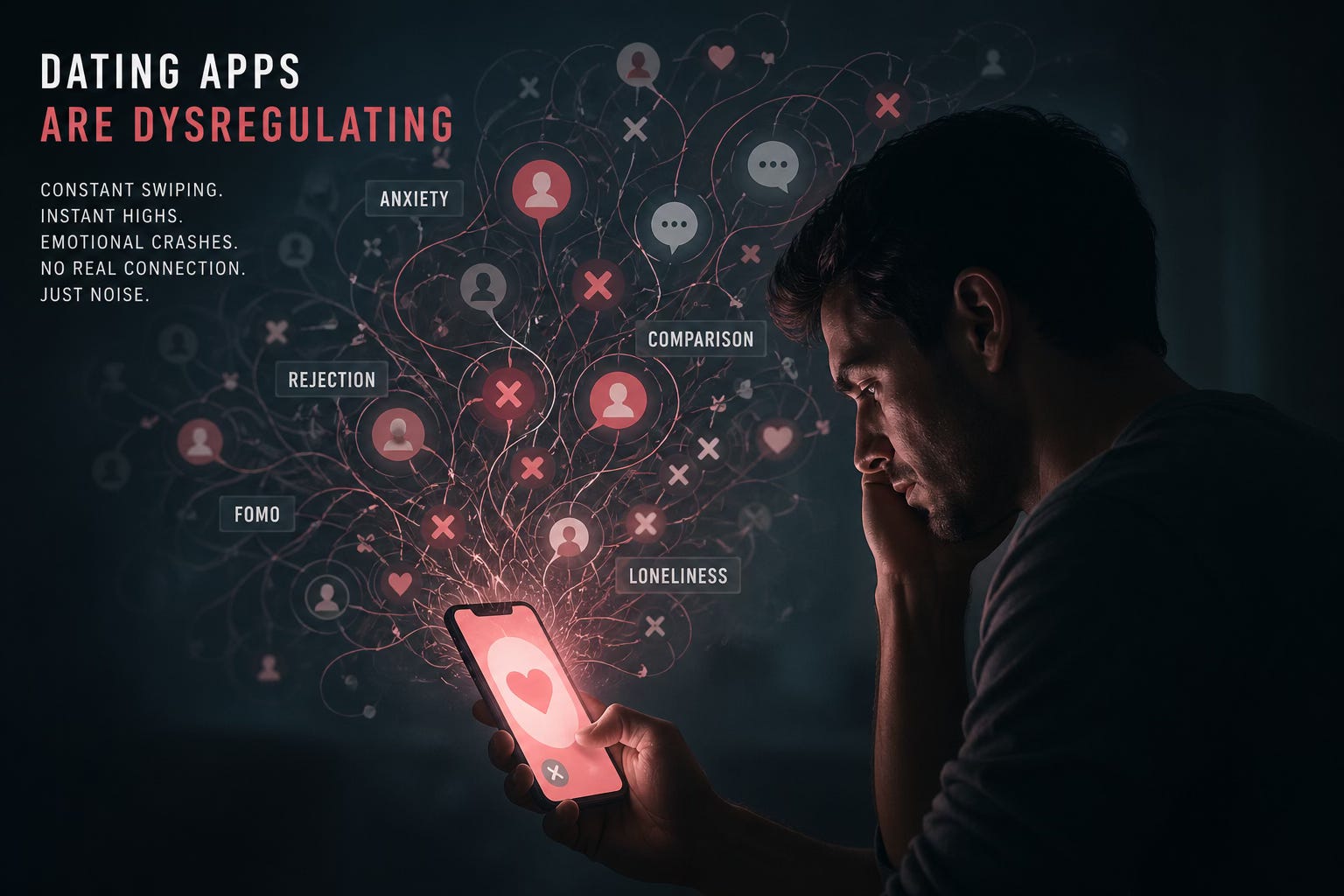
Who doesn’t like the anticipation of finding out whether we’ve got a match on Tinder, Bumble, Hinge or any other dating app out there. There’s something warming about knowing that the person we might find attractive appears to feel the same about us. The feeling is so affirming that it’s somewhat addictive. In fact, the high from that one match is enough to keep us swiping until we’re frustrated that we can’t continue and face an algorithmic mystery around who we match with and why. While dating apps have evolved from a platform used primarily for dating, they are now increasingly used as a tool for validation, dopamine and easy stimulation in a world that feels increasingly always on.
I’ve had a love hate relationship with dating apps possibly since my teenage years. The premise is appealing to a teenager with insecurities and a fantasy of finding the love of my life on a digital platform. Over the years, the apps have hit my self esteem as much as they’ve helped it. While some may argue that you shouldn’t be using dating apps as a tool to build confidence, it’s hard not to let the apps and their users influence how you view yourself. Whether it’s trialling new pictures, updating your bio or experimenting with opening messages, at times dating apps can feel like a slot machine that keeps us in an anticipatory loop as we hope to land the prize of love.
For me, I’ve often got to the point where I’ve recognised the negative effect of dating apps and swiftly deleted them. This has often been followed by a fear of inaction as it pertains to my dating life, and you know what they say, you’ve got to be in it to win it. But, I don’t think I’m the only one to feel frustrated at the lack of candidates on the app that want something meaningful. The constant anticipation, hope, and disappointment is increasingly dysregulating to our nervous system as longing, waiting, wanting and feeling let down can all adversely impact our nervous system, leaving us worse off than when we were off the apps.
My sentiment is also backed up by research which has found that dating apps impact the human nervous system by exploiting reward circuitry and triggering chronic stress responses, often leading to a state of heightened anxiety, compulsive behaviour, and "partial attachment". The combination of infinite, "gamified" choices and unpredictable, intermittent rewards keeps the nervous system in a state of high arousal and constant readiness for reward (dopamine hit) or threat (rejection), which can result in emotional burnout.
The results of a meta-analysis on dating app users also showed interesting results finding that across studies, dating app users showed significantly worse mental health outcomes, including depression, loneliness, anxiety, and psychological distress, than people who did not use dating apps. It’s clear that dating apps can be debilitating to our nervous systems without us even realising it. We often normalise suspense on dating apps, the uncertainty and the intermittent reinforcement, but dating should be straightforward, provide clarity and most importantly feel calm to your nervous system. To mitigate dating app burnout which is a growing phenomena, I advise my clients to do the following.
Don’t rely on dating apps alone to meet a partner
We often think that if we’re not using dating apps then we’re not actively taking the necessary steps to better our situation and find a meaningful connection. This isn’t always the case, and it doesn’t have to be a one or the other approach. While dating apps can be a tool, they don’t need to be the only tool. Combining dating app use with singles events, hobbies, parties, new activity’s can be a way to take dating apps off the pedestal and reach a more empowered place where you feel like you’re using the dating app, and it’s not using you.
Recognise your own triggers
If you value consistency in a partner, then recognise inconsistency with matches on dating apps. If someone says that they will message you and they don’t, well take a moment to reflect on what that says about them as opposed to what that says about you. Would you want a relationship with someone who doesn’t stick to their word? It’s these signs that you have to keep an eye out for, if someone triggers your anxiety or makes you feel uncertain or unsure pay attention to this feeling. There is likely a trigger there that this person has exposed, and it’s up to you to recognise what that trigger is and whether you want to engage with someone that could potentially do it again further down the line. Often the red flags have been there from the start.
Don’t focus too much on metrics
Dating apps have inadvertently put some characteristics on a pedestal like height, age, job that has somewhat increased social desirability. The filters have almost promoted a hierarchy in the realm of dating apps, that may not necessarily matter as much in the real world or when it comes to finding a meaningful partner who will be there for you when the going gets tough. Try not to fixate on meaningless characteristics like height, body type, tribe, preferences and instead consider whether this person is making an effort, has a sense of humour and shows compassion and/or care when it matters.
If you’ve found this article helpful, be sure to subscribe.
Great piece 🧩👏 loved it coz it's relatable